


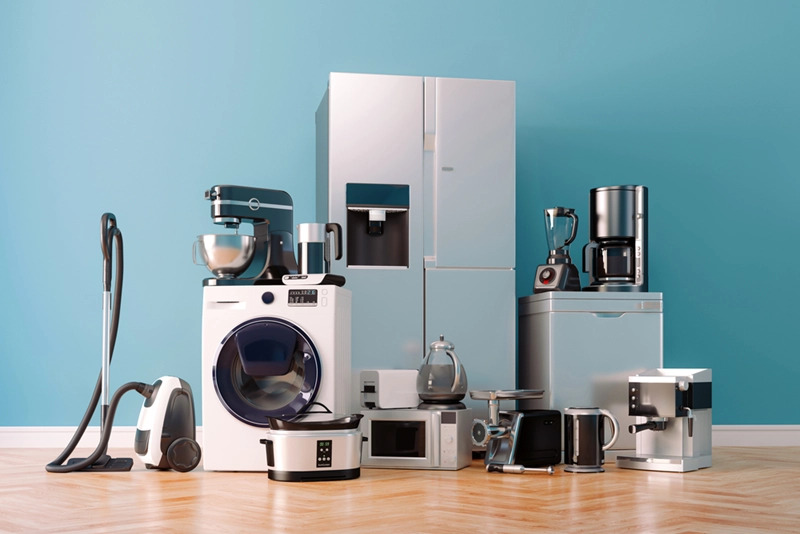
A stronger repair framework is useful, but it does not remove the everyday problem of finding the correct part. Customers still need a reliable way to identify the appliance, separate the model number from the serial number, keep revision markers, and move from the correct model to the correct compatible spare part.
Repair rights help only if customers can act on them: a legally repairable appliance is still difficult to keep in use if the route to the correct spare part is uncertain.
The repair debate often focuses on access, law, and manufacturer obligations. Those issues matter. But there is another part of the repair journey that gets less attention: practical compatibility. Even when spare parts exist, the customer still has to find the one that fits the exact appliance model in front of them.
The European Commission's repair of goods framework is designed to support repair and reuse. That is an important direction. The missing practical question is simpler: once the customer has a broken appliance at home, how do they identify it accurately enough to buy the right part first time?
Why a legal right to repair is not the same as an easy repair
A right to repair can improve the environment around repair. It can improve obligations, access, and market behaviour. It does not automatically make the process smooth for ordinary customers. The hard moment often arrives when the customer is looking at a faded rating plate, a part that looks almost right, or several similar model numbers that differ only by a suffix.
That is where practical repair either succeeds or starts to fail. If the customer cannot identify the exact appliance variant, the rest of the journey becomes fragile. The wrong shelf, seal, heater, pump, basket wheel, or thermostat may look plausible online and still be wrong when it arrives.
Why compatibility is the missing layer in the repair conversation
Compatibility is not a minor technical detail. In appliance spare parts, it is one of the main conditions that determines whether a repair remains realistic. Two appliances can share a brand, a near-identical outer design, and a similar marketing name while still using different internal parts. That is why revision markers, suffixes, service codes, and full model numbers matter.
Our article on common spare-part buying mistakes already shows how easily the search can drift: missing characters, incomplete model numbers, visual guesswork, and confusion between model and serial numbers all create uncertainty before the order is even placed.
Why better part finding turns repair from theory into practice
A repair system is only as useful as the customer's ability to use it. Better part finding does three important jobs at once:
- It reduces the chance of ordering the wrong part.
- It gives the customer enough confidence to continue with repair.
- It turns general repair support into a practical route they can actually follow.
That is why model-number-first support deserves far more attention in the repair discussion. The route from a broken appliance to a working repair usually begins with the full rating plate, not with a product image and not with a broad part name.
Why this matters for waste and product life
The Global E-waste Monitor 2024 reports 62 billion kg of e-waste in 2022, with only 22.3% formally collected and recycled in an environmentally sound way. The European Environment Agency has also highlighted the importance of longer product lifespans and improved repairability.
Those broader goals depend on very ordinary practical steps. If the customer cannot identify the appliance correctly, the policy ambition never fully reaches the kitchen, utility room, or workshop where the repair decision is being made.
Where better compatibility support helps most
Compatibility support matters across all major appliance categories. On washing machine spare parts, customers often need seals, pumps, filters, and heaters. On dishwasher spare parts, they need baskets, wheels, filters, seals, and pumps. On fridge freezer spare parts, they need shelves, drawers, hinges, thermostats, and door parts. On cooker and oven spare parts, they need elements, knobs, fans, and thermostats.
Across all of these routes, one thing remains true: the more precise the fit, the more valuable the model number becomes.
Why model-number support should be built into the journey
Model-number help should not be treated as a side note. It should sit at the beginning of the customer journey. Model Number Location helps the customer find the label. How To Find Spare Parts helps turn that model into the correct search route. Fixit Fox Finder helps when the label is difficult to read or the identification is uncertain.
This is the practical layer that turns repair support into a usable route for real customers, not just a policy ideal.
Turn repair intent into a workable search path
Conclusion
Repair policy matters, but the practical route to the correct part matters just as much. A right to repair is stronger when customers can identify the appliance properly, search by the full model, and order with confidence rather than guesswork.
For appliance spare parts, better part finding is not an optional extra around repair. It is one of the conditions that makes repair workable in the first place.
FAQ
Does a right to repair automatically make appliance repair easy?
No. Legal support can improve access, but customers still need a practical way to identify the exact appliance and find the correct compatible spare part.
Why is compatibility so important in appliance repair?
Parts that look similar can still be wrong for a specific model variant or revision. Compatibility is what turns a likely part into a suitable part.
How can I improve compatibility confidence before I order?
Use the full rating plate, keep suffixes and revision markers, and start with the exact model before narrowing down to the part type.
Find Your Model Number
Use Fixit Fox Finder
Shop Dishwasher Spare Parts
Shop Fridge Freezer Spare Parts
Sources
- The Global E-waste Monitor 2024, International Telecommunication Union
- UK e-waste data trends 2018 to 2024, Material Focus
- Directive on repair of goods, European Commission
- Product lifespans: monitoring trends in Europe, European Environment Agency
- Stop Guessing When Buying Spare Parts
- Stop Buying the Wrong Appliance Spare Parts | Fixit Fox Finder